
Top Business Schools In The UK | Top Ranked Business Universities
The UK has some of the best business schools in the world. You can find out more below.
Quick Answer
The UK’s leading business schools include London Business School, Oxford Saïd, Cambridge Judge, LSE and Warwick. For undergraduate degrees the route is UCAS; for MBA and Master’s programmes you usually apply directly to the school.
- Quality marker: triple accreditation (AACSB, AMBA, EQUIS)
- Undergraduate: apply via UCAS
- MBA / Master’s: apply direct
- Cluster: London leads, strong options nationwide
Reviewed for 2026 entry by the Uni Direct admissions team
UK Business Schools: Quick Facts
Essential entry metrics and enrollment data for international applicants.
Best Universities to Study Business in the UK
Navigating UK business university rankings can be complex. Discover how to identify the right business school, understand shifting entry paths, and match your academic goals with elite UK institutions.
Which universities have the top business schools in the UK and where are they located? What are the undergraduate and postgraduate entrance requirements? Let us help guide you through and advise you on applying to the top universities for business-related degree programmes at an undergraduate and postgraduate level.
Undergraduate Business Pathways
UK business schools are highly popular with international students because the available subject combinations vary significantly. Top universities for business in the UK frequently offer diverse degree paths, including:
- BBA: Bachelor of Business Administration
- Management Core: Business & Management or International Business
- Specialist Dual Honors: Core business modules combined with Marketing or Human Resources Management
Undergraduate entrance requirements vary widely by course and institution. For international students navigating these criteria, alternative entry routes like foundation and diploma entrance options are readily available. We provide direct evaluations to advise you exactly where you seamlessly meet native entry thresholds.
Postgraduate Focus & Global Market Value
The most specialised of them does not appear in undergraduate league tables at all. Cranfield School of Management is one of the oldest business schools in Europe and sits inside a university that teaches postgraduates only – and Cranfield is merging with King’s College London, with completion targeted for August 2027, so anyone applying there should check which institution will award the degree.
At the postgraduate Master’s level, the UK's top-ranked business schools offer advanced specialized MSc or MA degrees designed for immediate career acceleration. These programs focus on cross-border leadership and critical specialist disciplines:
- Global Marketing Ecosystems & Strategy
- International Human Resource Management
- Cross-border Trade & Multi-cultural Team Operations
International students choose to study in the UK due to its long-standing academic excellence, global degree value, and a highly diverse multi-cultural experience. Crucially, the UK's two-year post-study work permit (Graduate Route Visa) continues to drive record application volumes to premier business institutions as students secure immediate global employment opportunities.
Explore Elite Business Education
Select your ideal track to instantly analyse key entry parameters and strategic institutional pathways across the best business schools in the UK.
Undergraduate Track
Direct access routes to elite undergraduate programmes at world-class institutions like the University of Oxford and the University of St Andrews.
Postgraduate Track
Advanced career-acceleration qualifications across key institutions, including bespoke admissions strategy for elite Oxford or Cambridge frameworks.
Best Business Schools UK Rankings: 2026 League Table
Analysing the latest data from the Guardian University Guide alongside global employability vectors shows that choosing a top-tier institution involves reviewing clear variables. Entrance requirements to these premier universities are exceptionally competitive, forcing international applicants to assess multiple data metrics before submitting application forms.
To simplify your university selection process, our admissions team has compiled the official top 10 rankings matrix. This guide details key operational parameters, including campus locations, GMAT thresholds for postgraduate pathways, and average starting salaries for graduate outcomes.
| Rank | University / Business School | Location | GMAT Required (PG) | Average Starting Salary |
|---|---|---|---|---|
| 1 | University of Oxford (Saïd) | Oxford, England | Yes (Typical 650-730) | £45,000+ |
| 2 | University of St Andrews | St Andrews, Scotland | Not Required | £36,500 |
| 3 | University of Cambridge (Judge) | Cambridge, England | Yes (Typical 680+) | £45,000+ |
| 4 | Durham University | Durham, England | Optional / Recommended | £35,000 |
| 5 | London School of Economics (LSE) | London, England | Yes (Typical 650-720) | £42,000+ |
| 6 | University of Bath | Bath, England | Not Required | £34,000 |
| 7 | Loughborough University | Loughborough, England | Not Required | £33,000 |
| 8 | Warwick University (WBS) | Coventry, England | Required for select routes | £38,500+ |
| 9 | Imperial College London | London, England | Recommended (GMAT/GRE) | £41,000+ |
| 10 | Lancaster University (LUMS) | Lancaster, England | Not Required | £32,000 |
While consulting global league tables provides a helpful baseline for academic quality, international applicants must also weigh core practicalities like student satisfaction metrics, specific course lengths, and available regional pathway entries. Making an informed choice among the best business schools in the UK ensures you maximise your post-study career trajectory within the global corporate marketplace.
Top Universities for Business
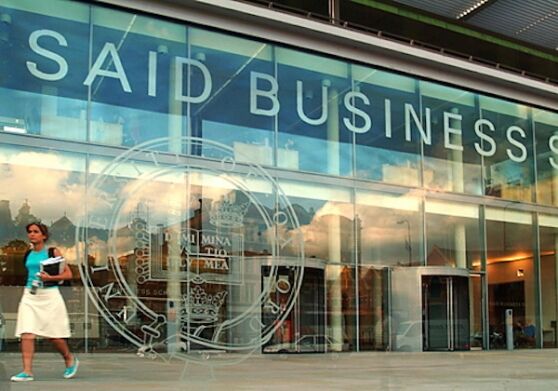
University of Oxford - Saïd Business School
Currently the number one best business school in the UK, is the Saïd Business School at the University of Oxford. Oxford has a wide range of undergraduate and postgraduate students studying subjects in business, management and finance. The Saïd Business School has a wide range of research interests and partakes in many global organisations and initiatives.

Durham University Business School
Durham University ranks fourth in the Guardian league table of top universities for business. Durham is located in in north-east of England. The university also operates on a collegiate system in the same manner as Oxford and Cambridge.
As one of the best business schools in the UK, if you have aspirations to study a business related degree subject at Durham University, but don’t yet have the grades or meet the entrance criteria, there are options for international students to apply for international foundation year or pre-masters entry through the international college there.
Lancaster University Management School
Ranking at number ten Lancaster University Management School is a great UK business school to study at. Lancaster University also has an international study centre that has operated for the past 10 years helping international students find pathways to study in the UK.
Suffolk Business School
The University of Suffolk Business school ranks 35th for business, management and marketing subjects. As well as having a top UK business school, the University of Suffolk is offering EU students scholarships, reducing tuition fees to pre-Brexit levels/home student level of £9250 a year for the duration of their degree course.
Oxford Brookes Business School
Oxford Brooks University offers a range of foundation, undergraduate and postgraduate programmes. There are also top-up degrees on offer in business, management and marketing subjects.
The global MBA programme at Oxford Brookes ranks in the top 20 MBA’s worldwide and the top MBA UK in the QS Distance Online MBA rankings 2020 for UK business school rankings. As with most MBA’s, Oxford Brookes asks for a minimum of three years’ relevant managerial or professional work experience for entry to the programme, in addition to usual requirements like a good degree and references.
The challenge for prospective applicants is in selecting their degree subject to study and then looking at where to apply across the best business schools in the UK. We can help you understand which entrance requirements you meet, assisting you with your application to a wide range of top business schools in the UK.
If you would like to find out more about the best business schools in the UK please contact us to speak to one of our advisers.
Business Career Progression
Elite business careers often require a postgraduate masters degree. Ensure your application is perfect with a winning personal statement and keep an eye on the upcoming UCAS deadlines.
Best Business Schools UK Rankings: Admissions FAQ
Get immediate, clear answers regarding entry criteria, enrolment timelines, tuition fees, and post-study career pathways across elite UK business institutions.
What are the top business schools in the UK according to recent rankings?
The best business schools in the UK consistently feature London Business School (LBS), Saïd Business School (University of Oxford), and Cambridge Judge Business School. Other premier institutions dominating global tables include Imperial College Business School, Warwick Business School (WBS), Alliance Manchester Business School, and Bayes Business School.
Which UK business school is best for international students?
London Business School offers an outstanding international experience, hosting a diverse student body representing over 140 nationalities. For applicants seeking global corporate networks and cross-cultural leadership development, the business schools at Oxford, Cambridge, Edinburgh, and Durham also provide excellent support infrastructure and international recruitment tracks.
How much does it cost to study business at top UK business schools?
Undergraduate international fees range from £20,000 to £35,000 annually. Postgraduate MSc degrees cost between £25,000 and £45,000. Flagship 2026 MBA intakes require a higher investment, with Oxford and Cambridge charging £64,000 to £74,000, while London Business School commands roughly £92,000 to £95,000.
Which business school in the UK has the best graduate employment rate?
London Business School leads the UK marketplace, with 95% to 98% of MBA graduates securing roles within three months of finishing their course. Cambridge Judge, Oxford Saïd, Imperial, and Alliance Manchester also report employment rates exceeding 90% via dedicated corporate career support services.
How do UK business school rankings differ in 2026?
The 2026 league tables show significant shifts due to updated ranking methodologies by QS and the Financial Times. Evaluations now place greater emphasis on digital transformation, environmental sustainability metrics, post-pandemic hybrid learning frameworks, class diversity, and measurable social impact alongside traditional career outcomes.
What business degree programmes are available at top UK universities?
At the undergraduate level, universities offer full-time three-year BA or BSc degrees in Business and Management, International Business, and Finance. Postgraduate tracks feature flagship MBA programmes alongside specialised one-year MSc degrees in Strategic Management, Marketing, and Entrepreneurship, plus flexible Executive MBA paths for working professionals.
What are the admission requirements for top business schools in the UK?
Undergraduate entry requires top A-level marks (AAA-AAB) and an IELTS score of 7.0+. Postgraduate MSc tracks require a strong 2:1 honours degree. Top-tier MBA programmes demand competitive GMAT scores (typically 650-700+), three to five years of corporate work experience, and an admissions interview.
How do QS World University Rankings evaluate business schools in the UK?
The QS ranking methodology balances academic reputation surveys (40%) with global employer reputation insights (10%). The remaining 50% evaluates research impact via faculty citation frequencies, the institutional H-index, student-to-faculty ratios, and international research network collaborations.